




Musana’s bold message that enterprise – not aid – is the future of development was heard loud and clear in the corridors of Westminster this week.
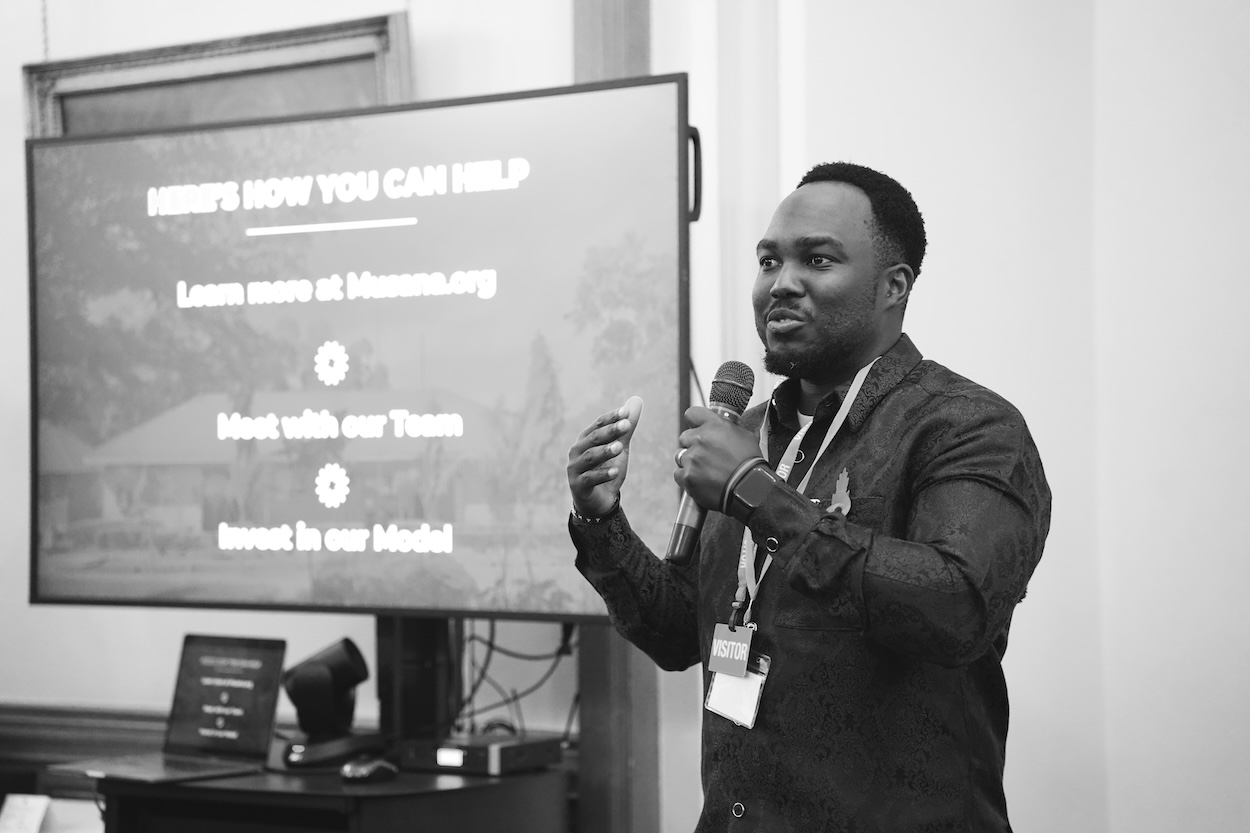
Our UK office hosted ‘From Aid to Enterprise’ in the Churchill Rooms in the House of Commons, London. The event brought together MPs, development leaders, donors, and faith-based organisations for an evening of discussion and challenge.
Our guest speaker was Rt Hon Andrew Mitchell MP, the former Secretary of State for International Development, who praised Musana’s approach as a timely and necessary challenge to traditional models of foreign aid. He told delegates that the era of unchecked aid is changing, and as budgets tighten, enterprise and local innovation will increasingly take precedence in creating lasting impact.
Throughout the event, delegates heard from Musana co-founder, Haril Kazindra, who shared how their 19 social enterprises, including schools, hospitals and hotels, now employs more than 700 staff and serve over 100,000 people each year. He explained how Musana’s model enables each project to become self-sustaining after initial investment, ensuring long-term growth without ongoing donor dependency.
Paul Smith, Musana’s UK Director, said the event marked a milestone moment for the organisation’s growing presence in Britain. He said it was encouraging to see Westminster engage so deeply with Musana’s story, adding that the charity’s model shows how enterprise can create dignity, ownership and sustainability in communities.
Mike Wood MP, who hosted the event, said Musana’s story is both a challenge and an inspiration. He added that the organisation is proving development doesn’t have to depend on handouts and that its results speak for themselves.
He said: “Musana is proving that development doesn’t have to depend on handouts. Their results speak for themselves, and I hope their story will inspire a new era of partnership between the UK and Africa.”
The atmosphere in Parliament was one of optimism and challenge, with a shared sense that the future of development lies not in dependency but in dignity through enterprise